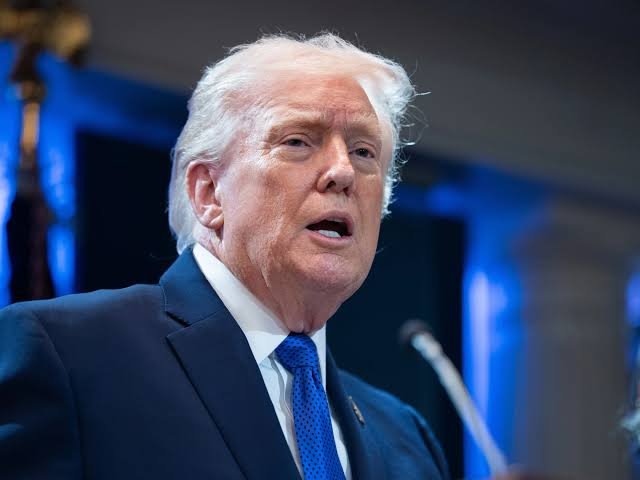
US President Donald Trump has said Russia has not been providing as much information about a reported plague incident as China did during the COVID-19 pandemic, while rejecting speculation that a death linked to plague in Russia was connected to the development of biological weapons.
Speaking to reporters at the White House, Trump said he did not believe the reported death was related to biological-weapons development. He also said Russian authorities had indicated that the situation was under control and that the United States was seeking to verify those assurances.
Trump also said he was preparing for a telephone conversation with Russian President Vladimir Putin, noting that Putin's birthday was being observed on the same day.
Russia warns against misinformation
Russian authorities on Wednesday warned against what they described as misleading information surrounding reports of a second suspected plague case, as calls grew internationally for greater transparency.
The reports have drawn renewed attention to plague, a serious infectious disease caused by the bacterium Yersinia pestis. However, Russian health authorities have sought to reassure the public that there is no wider epidemiological threat in the affected area.
The reported death involved a female laboratory worker who was employed at an institute involved in studying plague. The circumstances surrounding the case have prompted questions about possible exposure and the source of infection.
Authorities deny wider public-health threat
Russia's health authorities have said residents of Irkutsk and the surrounding region face no epidemic threat. Officials said more than 90 per cent of people who had been in contact with the woman had completed medical observation, with no signs of infectious disease reported among those monitored.
The authorities have maintained that there is no evidence of a wider outbreak in the city of Irkutsk or the surrounding Irkutsk region.
Kremlin spokesman Dmitry Peskov said Russia had informed the World Health Organization about a situation involving pneumonia of unknown origin in the Irkutsk region of southeastern Siberia.
The developments have nevertheless raised international questions about the level of information being made public by Russian authorities and whether sufficient details have been provided to independently assess the health risks.
International scrutiny
The episode comes amid renewed sensitivity over biological incidents and public-health transparency. While Russian officials have rejected indications of an epidemic, the reported laboratory death and subsequent claims of another case have intensified scrutiny from outside observers.
Trump's comments also place the episode in the broader context of the international debate over transparency during major infectious-disease incidents, drawing a comparison with the information released by China during the early stages of the COVID-19 crisis.
At present, Russian authorities maintain that the situation is contained and that there is no evidence of a wider epidemic in the Irkutsk region.