Ukraine launched what Moscow’s mayor called the biggest drone attack yet on the Russian capital on Sunday, as Russians voted on the final day of a parliamentary election that President Vladimir Putin has cast as a test of support for the war in Ukraine.
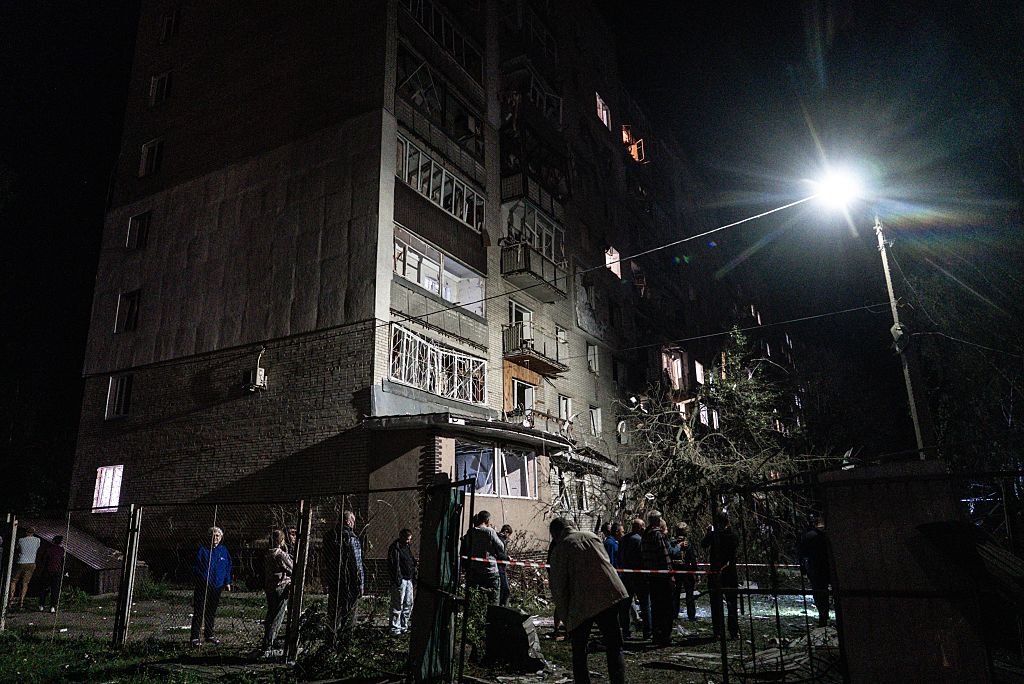
The drone strikes killed two people in the Moscow region and two more in the Russian-held part of Ukraine’s Kherson region, including an election official, according to Moscow Mayor Sergei Sobyanin and election authorities. A facility at Moscow’s oil refinery, which has been targeted before, was also damaged.
“The biggest attack by enemy drones has been repelled,” Sobyanin said on Telegram. “This unprecedented attack was clearly planned with the aim of disrupting the elections. The enemy did not succeed.”
The State Duma vote, the first since Russia launched its full-scale war in Ukraine in February 2022, is expected to see the ruling United Russia party easily retain its dominance in a political system critics say does not tolerate dissent.
The Kremlin is likely to present the outcome as evidence of public backing for Putin’s policies and for the war, now in its fifth year with no sign of ending soon.
Opposition Participation Remains Limited
The election has taken place amid significant restrictions on political opposition in Russia.
Critics of the Kremlin have argued that the electoral environment does not provide a level playing field for opposition candidates, particularly those opposed to the war.
Several anti-war politicians and opposition figures have been barred from participating, while prominent opposition activists have faced imprisonment, legal pressure or other restrictions.
The Kremlin, however, maintains that Russia's political system is functioning normally and that the election represents the will of the electorate.
Voting is also taking place in territories of Ukraine that Russia claims to have annexed, including parts of Donetsk, Luhansk, Zaporizhzhia and Kherson, as well as Crimea, which Russia annexed in 2014. Ukraine and its international partners reject Russia's claims over those territories and have condemned the holding of elections there as illegitimate.
Ukraine-Russia Drone War Intensifies
The latest assault is part of an escalating drone war between Russia and Ukraine.
Ukraine has increasingly used long-range drones to strike Russian oil refineries, fuel depots, warehouses and other infrastructure that Kyiv says contributes to Russia's ability to sustain the war.
Russia has simultaneously continued large-scale missile and drone attacks against Ukrainian cities and infrastructure.
The attacks have also raised concerns about the vulnerability of energy infrastructure on both sides.
The latest strikes came despite recent statements from US President Donald Trump that Russia and Ukraine had agreed to stop targeting energy infrastructure. However, attacks on energy facilities have continued.
Impact on Moscow
The scale of Sunday's attack forced Russian authorities to take additional security measures around the capital.
The attack also affected aviation operations, with disruptions reported at Moscow's major airports as Russian authorities dealt with the large number of incoming drones.
Although most of the drones were reportedly intercepted before reaching the city, several penetrated the capital's defences and caused damage to industrial and residential sites.
The incident demonstrates the growing reach of Ukrainian drone technology and the increasing difficulty Russia faces in preventing attacks on strategic infrastructure far from the front line.
Election Under the Shadow of War
For the Kremlin, the parliamentary election is taking place against the backdrop of a war that has now entered its fifth year.
The government has sought to portray the conflict as a national struggle requiring unity, while Ukrainian attacks deep inside Russian territory have brought the consequences of the war closer to major population centres.
Sunday's attack therefore placed Russia's political process and the war directly alongside one another: voters were heading to polling stations while air-defence systems were operating over the capital and surrounding regions.
Russian authorities have accused Ukraine of attempting to interfere with the election, but the specific evidence supporting that allegation has not been publicly established.
As voting concludes, attention will now turn to the official results and to how the Kremlin interprets the outcome amid continuing military pressure, economic challenges and the ongoing conflict with Ukraine.
Aalimi Nation | International Desk
With inputs from Reuters
-Reuters