Sedpura Construction Row: Questions Over Alleged ₹5 Crore Deal
Political allegations intensify over alleged illegal construction in Harwan; public seeks independent probe into land records, permissions and claims of financial dealings
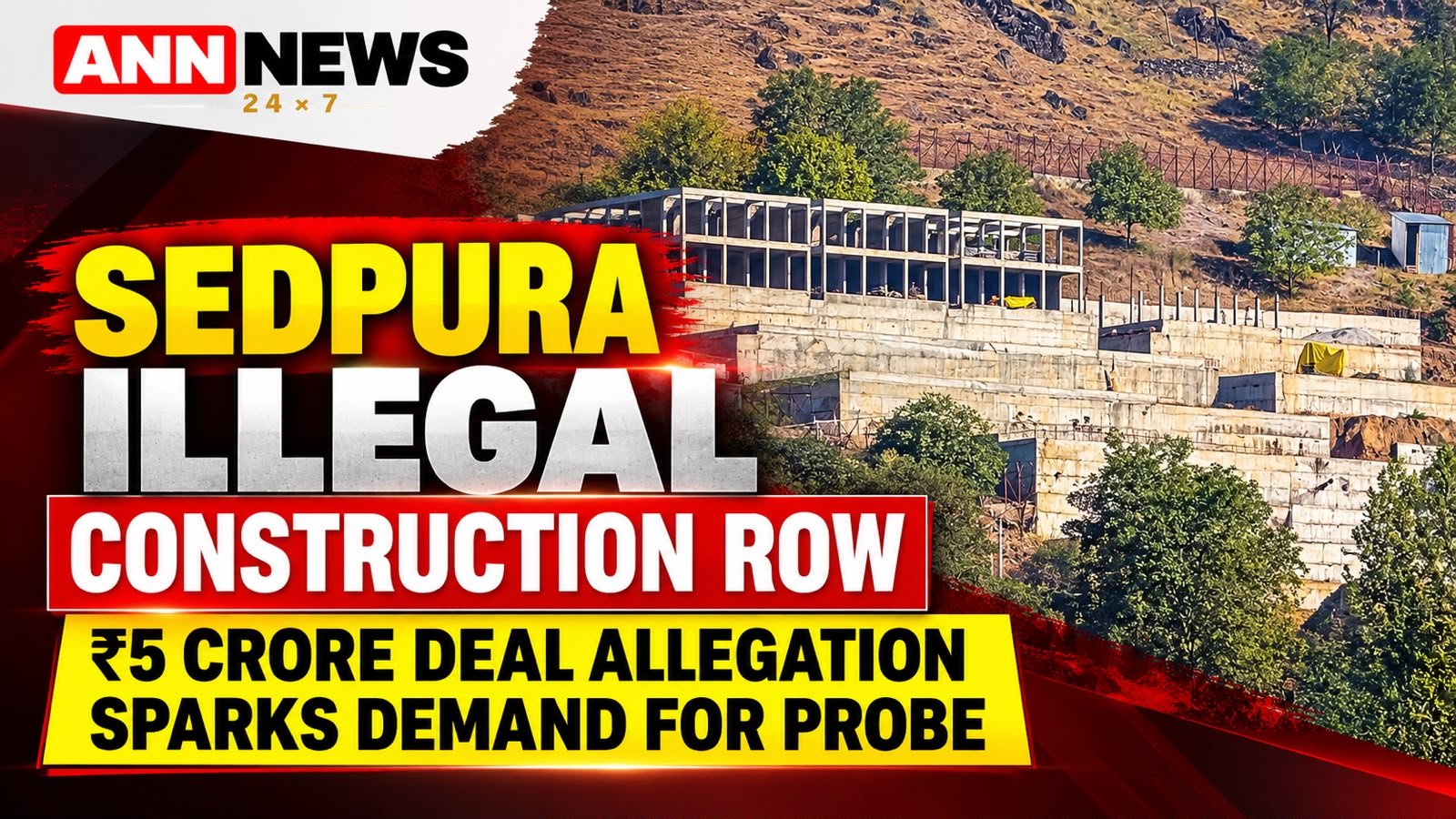
SRINAGAR: The controversy over alleged illegal construction at Sedpura in Harwan has moved beyond a political exchange between the Apni Party and the National Conference government, with growing demands for transparency, an independent investigation and accountability from the authorities.
At the centre of the controversy is the reported purchase of land by a businessman from Mumbai for a proposed hotel project in Sedpura. Apni Party president Altaf Bukhari has alleged that a non-local individual was permitted to purchase a substantial amount of land and that what was initially described as permission for residential hut-type structures subsequently turned into construction of a multi-storey hotel.
The government has rejected the allegations, maintaining that the National Conference government neither allotted government land nor granted permission for the alleged construction.
According to Chief Minister Omar Abdullah's adviser Nasir Aslam Wani, the businessman purchased private land from 15 local residents. Wani has also alleged that an attempt was made to construct a boundary wall without the required permission from the Lakes Conservation and Management Authority (LCMA), following which the authorities intervened and stopped the work.
The government has further alleged that the contractor and an alleged frontman associated with the construction had links to the Apni Party. These claims, like the allegations made by the opposition, require verification through official records and an impartial investigation.
The ₹5 Crore Question
The controversy has taken another turn following claims circulating locally about an alleged ₹5 crore financial deal connected to the matter.
The claim has not been independently verified, and there is currently no established evidence in the public domain proving that such a transaction took place.
That distinction is crucial. An allegation cannot be treated as a fact, nor should any individual or political party be declared guilty merely on the basis of unverified claims.
At the same time, if credible evidence or a formal complaint exists regarding a financial transaction, political influence, bribery or misuse of official position, the appropriate investigative agencies should have the opportunity to examine it.
What Should the Government Do?
The immediate issue is no longer simply whether construction has been stopped. The public deserves to know what happens next.
Authorities should clarify:
Whether the construction is legally authorised.
Whether all required LCMA and other statutory permissions were obtained.
What the official land records show.
Whether the land was purchased through valid and documented transactions.
What action has been taken against any alleged violation.
Whether the construction will be demolished if it is found to be illegal.
Whether the land will be restored or recovered if an unlawful occupation or violation is established.
Whether an FIR will be registered if an investigation establishes a cognisable offence.
And whether the alleged ₹5 crore transaction will be investigated if credible evidence is found.
Transparency Is the Way Forward
The government can end much of the speculation simply by making the relevant records and decisions transparent.
Land purchase documents, building permissions, LCMA records, inspection reports and other relevant official documents should be examined as part of a transparent process.
If the construction is illegal, the public will expect enforcement under the law. If it is legal, the government should make the relevant approvals clear so that doubts surrounding the project can be addressed.
The same standard should apply to allegations of political influence or financial misconduct. If evidence emerges against any politician, official, contractor, businessman or other individual, the law should take its course irrespective of political affiliation or influence.
The Sedpura controversy should not become a battle between political parties. At its core, it is a question of governance and the rule of law.
The government now faces a straightforward test: Will the matter end with the stopping of construction, or will the authorities take the case through a full legal and investigative process?
The public does not need competing political statements. It needs facts, documents, an impartial inquiry and, where violations are established, visible legal action.
'ANN News Checks Contractor's Political Affiliation'
An important aspect of the controversy concerns a claim attributed to Nasir Aslam Wani that the contractor or alleged frontman involved in the construction had links to the Apni Party.
Aalimi Nation has independently checked this particular claim and found that the political-affiliation allegation, as presented, does not appear to be supported by the information available to the channel.
During the verification process, the individual himself stated that he was a worker of the National Conference, not the Apni Party.
The claim has also come under scrutiny after photographs purportedly showing the individual with Chief Minister Omar Abdullah and his two sons began circulating publicly. The photographs have added to questions over the assertion that the individual was associated with the Apni Party.
However, photographs with political leaders or public figures, by themselves, do not conclusively establish formal party membership. ANN News therefore considers the political-affiliation issue a matter requiring documentary confirmation rather than political assertion.
What is clear from Aalimi Nation ' verification is that the claim linking the contractor to the Apni Party cannot be treated as an established fact without further evidence.
The Sedpura file should not simply be closed. It should be brought to a clear and lawful conclusion.